Nictech  Electrical  Enterprises

Nictech Electrical Enterprises was established in January 1974 and has been providing its service to the industrial sector for 35 years specializing in petrochemical and hazardous installations.

Due to our vast design, manufacturing and installation experience our capabilities are well within any industrial requirement. Our scope of work ranges from the design, manufacture and installation of MCC substation to general industrial lighting and distribution and includes PLC capabilities, metering, gauging and safety or emergency systems.

We at Nictech Electrical Enterprises are constantly in the pursuit of new business and to diversify our capabilities.

This is just a brief overview of what we have to offer. Please feel free to look over our services and projects in more detail or if you have further inquiries feel free to contact us.

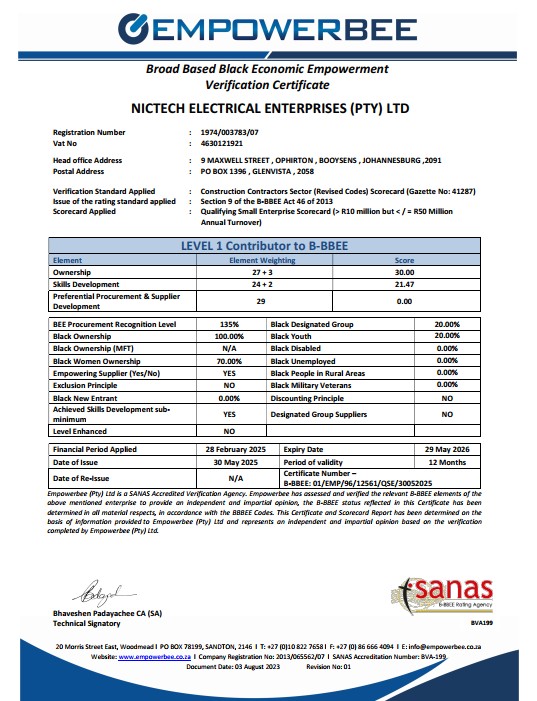
BBBEE CONTRIBUTION – Level 1

Products

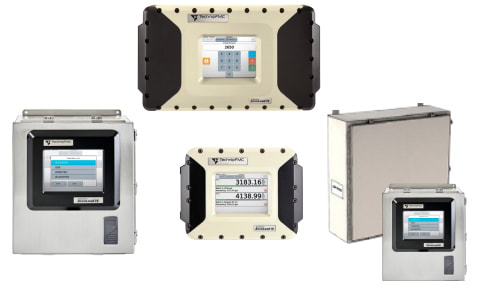
Accuload systems

AccuLoad systems, including AccuLoad III and IV models used in fuel loading and blending operations.

These systems are typically installed at terminals and depots to manage precise fuel dispensing, blending, and transaction logging. The AccuLoad III and IV are manufactured by FMC Technologies (now part of TechnipFMC) and are widely used in petroleum distribution networks.

🔧 Key Features of AccuLoad Systems

  • AccuLoad III: Known for its robust blending capabilities, multi-arm control, and integration with Scully overfill protection.
  • AccuLoad IV: Offers enhanced processing power, touchscreen interface, Ethernet connectivity, and advanced diagnostics.
  • Applications: Used in truck loading skids, railcar loading, and pipeline injection systems.

If you’re evaluating upgrades or replacements, the AccuLoad IV is generally preferred for its modular design and future-proofing capabilities. Let me know if you’d like help comparing specs or sourcing suppliers in South Africa.

Motor control systems

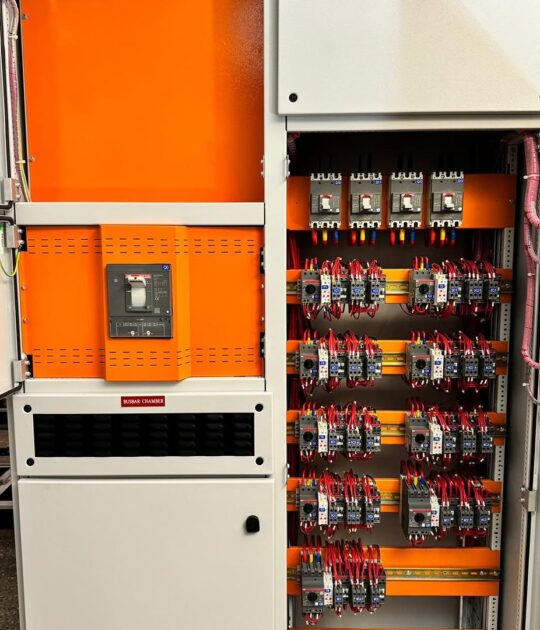
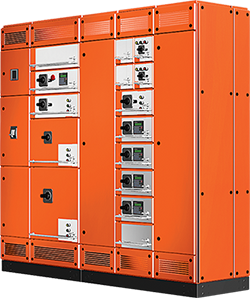
Motor Control Centres (MCCs) in the petrochemical industry are centralized systems used to control, protect, and monitor electric motors that drive critical process equipment such as pumps, compressors, and fans. They are engineered for high reliability, safety, and maintainability in hazardous environments.

🏭 Overview of MCCs in Petrochemical Applications

Motor Control Centres are essential infrastructure in petrochemical plants, refineries, and terminals. They house multiple motor starters and control units in a modular, enclosed assembly, enabling centralized management of motor-driven systems.

⚙️ Key Features and Components

  • Enclosed Modular Design: MCCs consist of vertical sections (cubicles) with removable or fixed drawers, each controlling a motor or group of motors.
  • Motor Starters: Includes direct-on-line (DOL), star-delta, soft starters, or variable frequency drives (VFDs) depending on application needs.
  • Protection Devices: Circuit breakers, fuses, overload relays, and earth fault protection ensure motor and personnel safety.
  • Control and Monitoring: PLCs, HMIs, and SCADA integration allow real-time
  • diagnostics, remote control, and predictive maintenance.
  • Hazardous Area Compliance: MCCs are often rated for ATEX/IECEx zones, with flameproof or pressurized enclosures to prevent ignition in explosive atmospheres.

🛡️ Design Considerations for Petrochemical Environments

  • Ingress Protection (IP54–IP65): To guard against dust, moisture, and corrosive vapors.
  • Arc Flash Containment: Internal arc classification (IAC) designs to protect personnel during faults.
  • Redundancy and Segregation: Dual feeders, busbar separation, and compartmentalization to ensure uptime and isolate faults.
  • Thermal Management: Ventilation or air conditioning to manage heat from high motor loads and VFDs.

🔌 Typical Applications

  • Pump Skids: Crude oil, condensate, and chemical transfer.
  • Compressor Stations: Gas compression and vapor recovery.
  • Cooling Towers and Fans: Process cooling and air handling.
  • Blending and Metering Systems: Integration with systems like AccuLoad for precise control.

📈 Benefits

  • Centralized Control: Simplifies operations and maintenance.
  • Scalability: Modular design allows easy expansion.
  • Improved Safety: Built-in interlocks, alarms, and fail-safes.
  • Operational Efficiency: Supports automation and energy optimization.

fire water systems

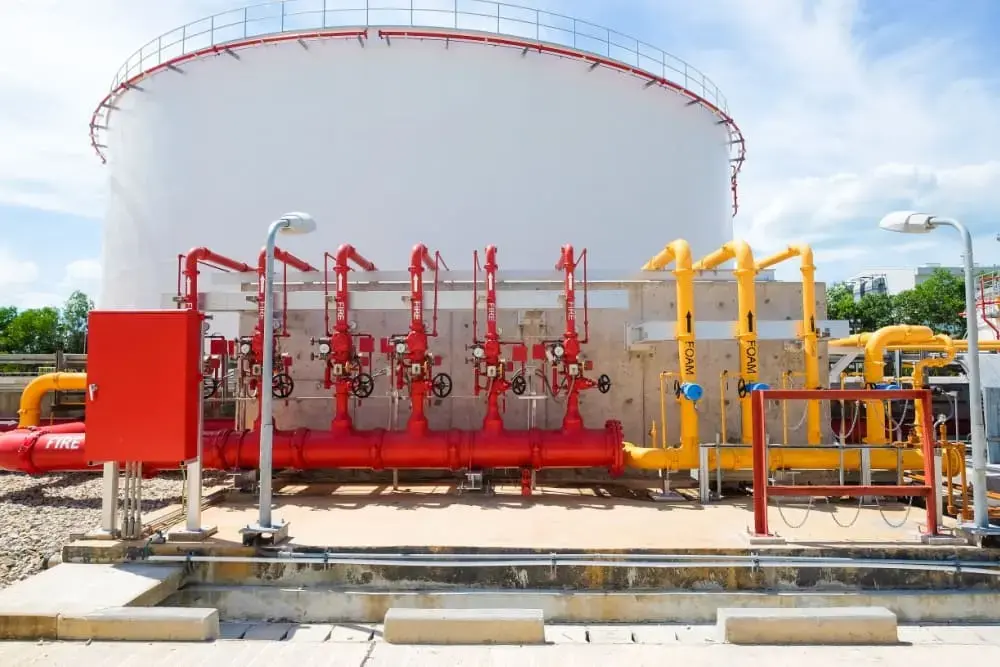
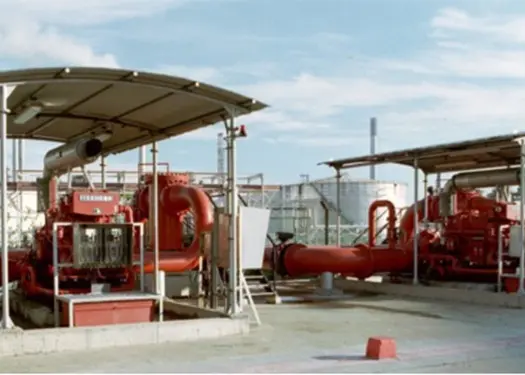
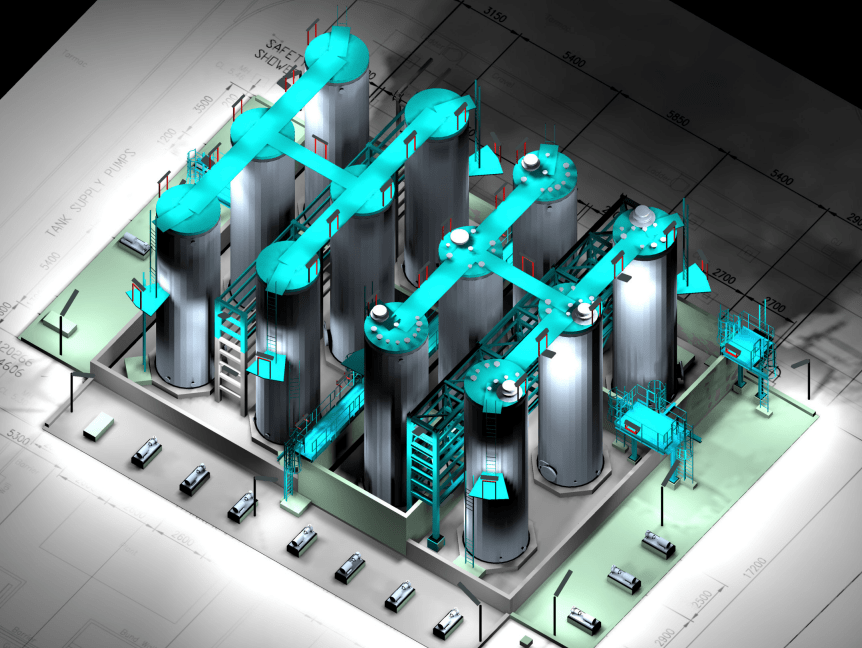
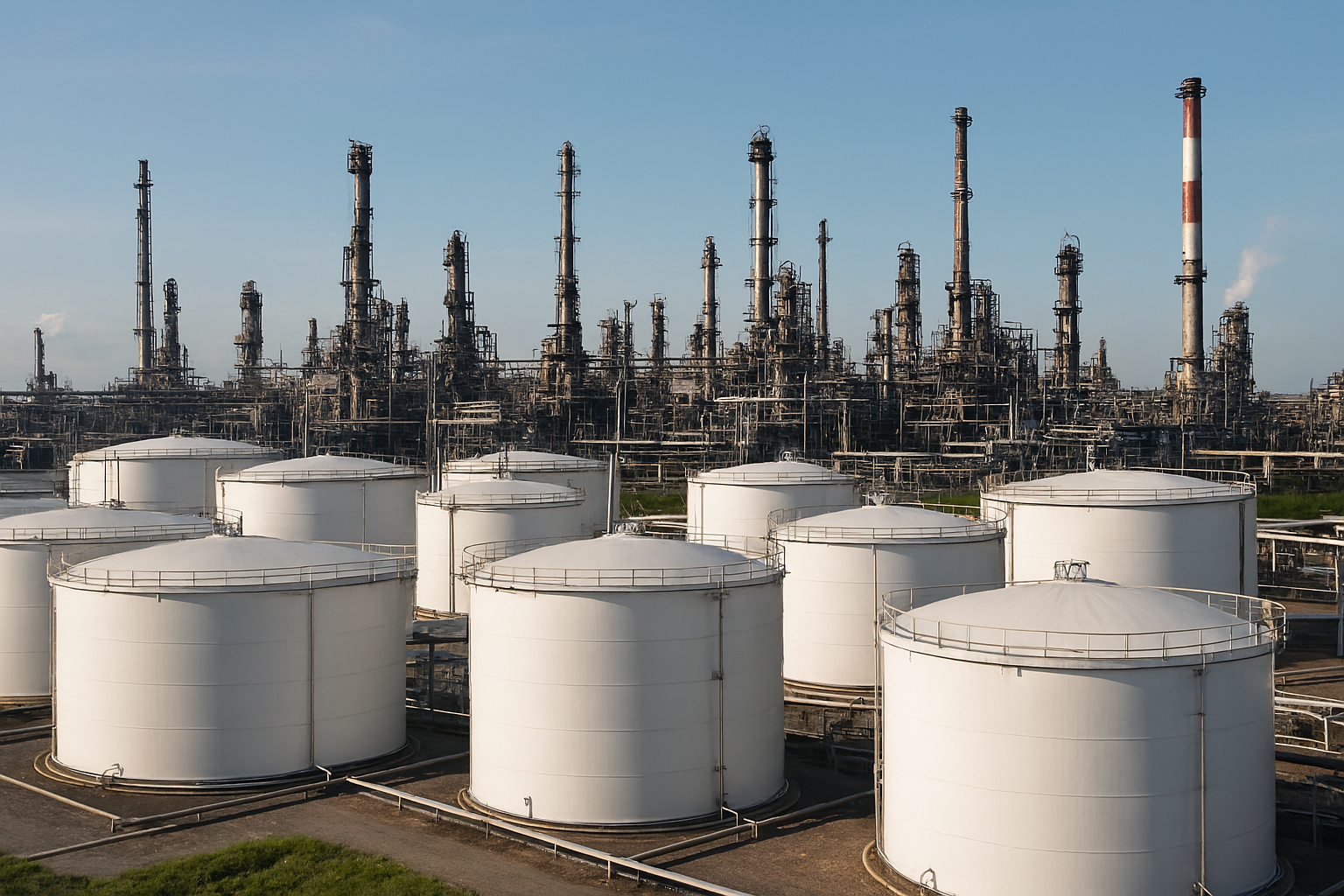
Fire water systems used in tank farms, including foam monitors, water spray nozzles, and storage tanks.

These systems are critical for protecting flammable liquid storage facilities, especially in petrochemical and fuel terminals. They typically include:

🔥 Key Components of Tank Farm Fire Water Systems

  • Fixed Foam Monitors and Chambers: Deliver foam to suppress hydrocarbon fires.
  • Water Spray Nozzles: Cool tank surfaces and prevent structural failure during fire exposure.
  • Fire Water Storage Tanks: Ensure adequate water supply for firefighting, often elevated or pressurized.
  • Pump Rooms and Ring Mains: Distribute water and foam across the facility with redundancy.
  • Bund Wall Protection: Foam pourers and deluge systems protect containment areas around tanks.

These systems must comply with NFPA 11, NFPA 15, and API 2030 standards, and are often integrated with automated detection and alarm systems. Let me know if you’d like help drafting technical specs or integrating these visuals into your website upgrade.

Lightning protection

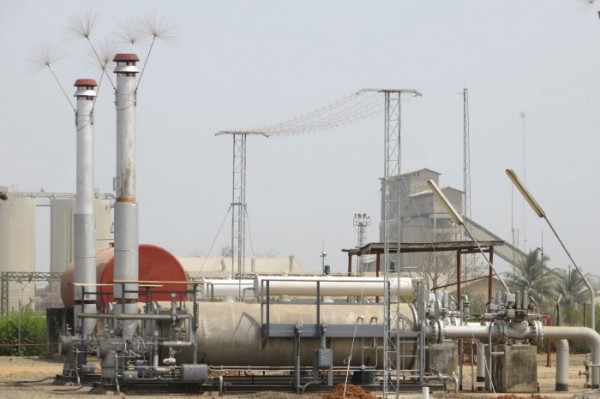
Lightning protection systems in the petrochemical industry are engineered to prevent fires, explosions, and equipment damage caused by lightning strikes. These systems are essential for safeguarding flammable storage tanks, process units, and control infrastructure in high-risk environments.

⚡ Overview of Lightning Protection Systems (LPS)

Petrochemical facilities are particularly vulnerable due to their open layouts, tall structures, and the presence of volatile substances. A well-designed LPS mitigates these risks by safely intercepting, conducting, and dissipating lightning energy.

🧱 Core Components

  • Air Terminals (Lightning Rods): Installed on rooftops, tank domes, and flare stacks to intercept strikes.
  • Down Conductors: Provide a low-resistance path from air terminals to ground.
  • Grounding Systems: Deep earth electrodes or ring grounds dissipate energy safely into the soil.
  • Bonding Networks: Electrically connect metallic structures to prevent dangerous potential differences.
  • Surge Protection Devices (SPDs): Protect sensitive electronics and control systems from transient overvoltages.

🛢️ Applications in Petrochemical Facilities

  • Storage Tank Farms: Equipped with roof-mounted rods and perimeter grounding to prevent ignition.
  • Process Units: Bonded and shielded to protect instrumentation and control panels.
  • Control Rooms and MCCs: Fitted with SPDs and isolated grounding to protect automation systems.
  • Flare Stacks and Chimneys: Require specialized air terminals and high-voltage insulation.

📐 Design Standards

  • NFPA 780: Standard for lightning protection systems.
  • IEC 62305: International standard for risk assessment and system design.
  • API RP 545: Guidelines for lightning protection of aboveground storage tanks.

✅ Benefits

  • Fire Prevention: Reduces risk of ignition in flammable zones.
  • Operational Continuity: Minimizes downtime and equipment loss.
  • Regulatory Compliance: Meets insurance and safety audit requirements.

TANK GUAGING SYSTEMS

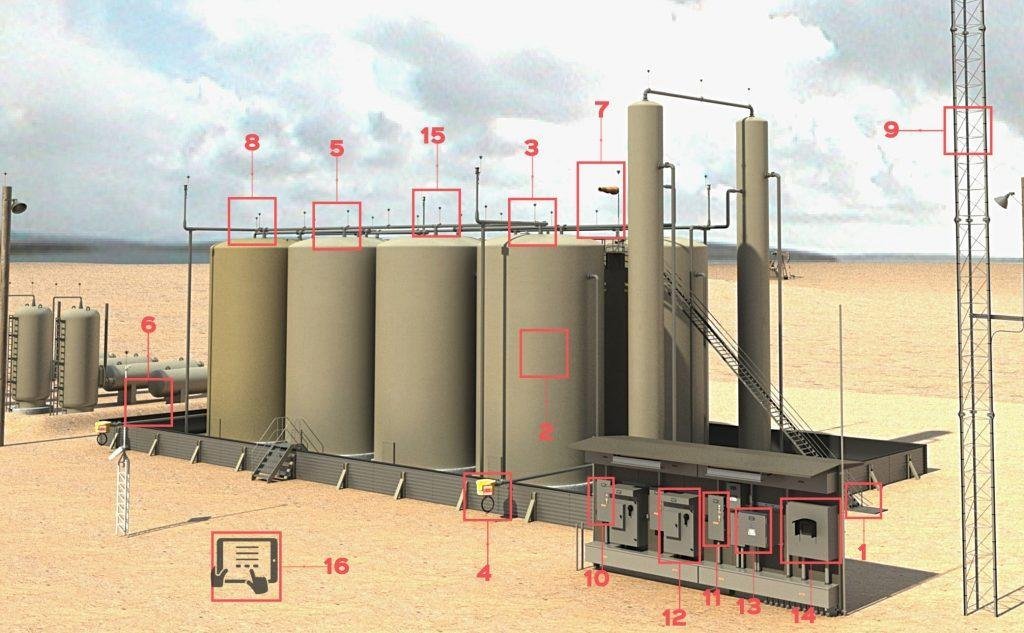
Tank gauging systems in the petrochemical industry are integrated solutions used to accurately measure and monitor the contents of storage tanks—ensuring safety, inventory control, and regulatory compliance.

These systems are essential for managing high-value liquids such as crude oil, refined fuels, and chemicals, where precision and reliability are critical.

A Tank Gauging System (TGS) is a combination of sensors, transmitters, and software used to determine the level, volume, mass, temperature, and pressure of liquids stored in tanks. It provides real-time data to operators and integrates with control systems like SCADA or DCS.

⚙️ Core Components

  • Level Sensors: Radar (non-contact), servo (mechanical), or hydrostatic sensors measure liquid height.
  • Temperature Probes: Multi-point sensors capture temperature gradients for accurate volume correction.
  • Pressure Transmitters: Used in pressurized tanks to calculate density and compensate for vapor pressure.
  • Data Acquisition Units: Interface between field instruments and control systems.
  • Control Software: Visualizes tank data, triggers alarms, and supports inventory reconciliation.

🔐 Key Functions

  • Inventory Management: Tracks tank contents with high accuracy, often to ±0.5 mm level resolution.
  • Overfill Prevention: Alerts operators before critical levels are reached, reducing spill risk.
  • Custody Transfer: Ensures precise measurement for commercial transactions, compliant with API and OIML standards.
  • Leak Detection: Identifies discrepancies between input/output and tank levels.
  • Compliance Reporting: Supports environmental and safety audits.

🧰 Typical Applications in Petrochemical Facilities

  • Crude Oil Storage Farms
  • Refined Product Terminals
  • Blending and Additive Tanks
  • Chemical Reactors and Feedstock Vessels

🏗️ System Architecture

Modern TGS setups often use redundant Ethernet networks, intrinsically safe field devices, and cloud-based analytics. They can be integrated with terminal automation systems like AccuLoad for synchronized loading and inventory control.

📈 Benefits

  • Operational Efficiency: Reduces manual gauging and improves throughput.
  • Safety Assurance: Minimizes risk of overfills, leaks, and vapor exposure.
  • Regulatory Compliance: Meets standards like API 2350, NFPA 30, and IEC 61508.
  • Cost Savings: Prevents product loss and supports accurate billing.

LIGHTING SYSTEMS


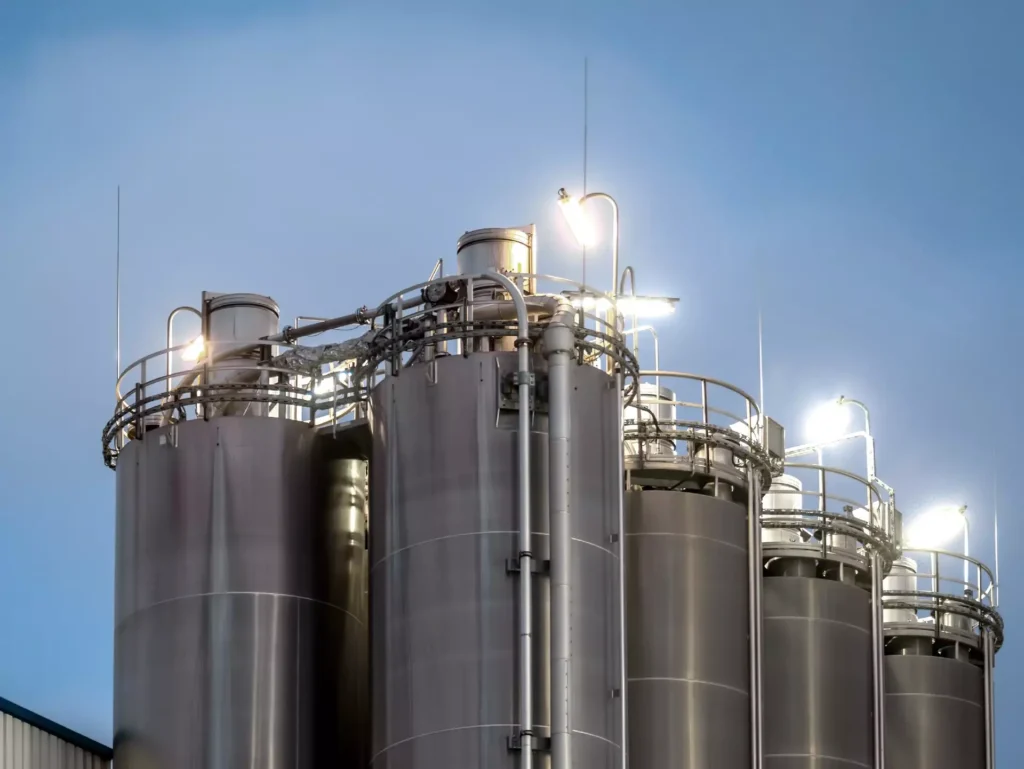
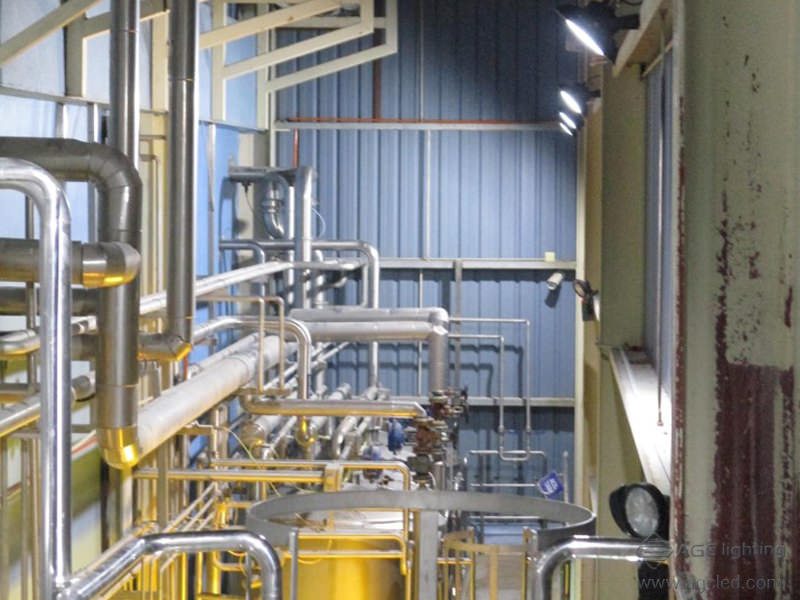
Lighting setups in tank farms, including high mast lights, ATEX-rated fixtures, and night-time illumination of fuel storage tanks.

These visuals highlight how industrial lighting is deployed to ensure safety, visibility, and compliance in hazardous environments like petrochemical terminals and refineries.

💡 Key Lighting Features in Tank Farms

  • High Mast Lighting: Tall poles with multiple floodlights provide broad area coverage, especially for large open yards and bunded zones.
  • Explosion-Proof Fixtures: ATEX/IECEx-certified luminaires are used in flammable zones to prevent ignition risks.
  • Linear and High Bay LEDs: Installed on walkways, pump skids, and control rooms for task-specific illumination.
  • Emergency Lighting: Battery-backed systems ensure visibility during power outages or fire incidents.


  • Smart Controls: Motion sensors, timers, and SCADA integration help optimize energy use and maintenance.

Design Considerations

  • Ingress Protection (IP65–IP67): Ensures durability against dust, rain, and chemical vapors.
  • Corrosion Resistance: Fixtures are often made from stainless steel or coated aluminum to withstand harsh environments.
  • Light Uniformity: Reduces shadows and glare, improving safety for operators and drivers.
  • Color Temperature: Neutral white (4000K–5000K) is preferred for clarity without harshness.

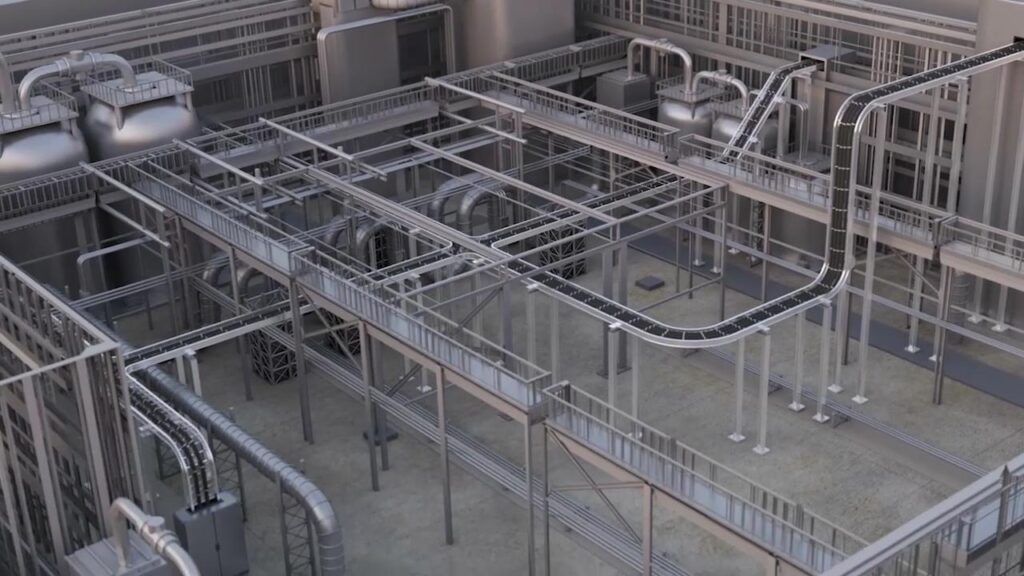
CABLE MANAGEMENT SYSTEMS


Cable Management Systems (CMS)

In petrochemical plants, refineries, offshore platforms, and terminals, cable management systems must withstand extreme conditions—heat, corrosion, vibration, and explosive atmospheres—while ensuring uninterrupted power and signal transmission.

⚙️ Key Components

  • Cable Trays and Ladders: Provide structural support for large cable runs. Available in galvanized steel, stainless steel, aluminum, or GRP (glass-reinforced plastic) for corrosion resistance.
  • Conduits and Ducting: Protect cables from mechanical damage and environmental exposure. Often used in classified zones.
  • Cable Hangers and Clamps: Secure cables to structures, minimizing movement and wear.
  • Junction Boxes and Enclosures: ATEX/IECEx-rated boxes for terminating and transitioning cables safely.
  • Glands and Seals: Maintain ingress protection and explosion containment at cable entry points.

🛢️ Applications in Oil & Gas Facilities

  • Offshore Platforms: CMS must resist saltwater corrosion, UV exposure, and dynamic loads.
  • Tank Farms and Terminals: Systems are designed for flammable zones, often with flameproof or intrinsically safe components.
  • Process Units: Cable routing supports control, instrumentation, and power distribution across pumps, compressors, and MCCs.
  • Pipeline Infrastructure: Long-distance cable runs require robust support and thermal management.

🛡️ Design Considerations

  • Hazardous Area Compliance: Must meet ATEX, IECEx, and NEC standards for Zone 1/2 or Class I Div 1/2 areas.
  • Corrosion Resistance: GRP and stainless steel are preferred in coastal or chemical-rich environments.
  • Fire Resistance: Fire-rated trays and cables ensure circuit integrity during emergencies.
  • Modularity and Accessibility: Facilitates maintenance, upgrades, and fault isolation.

📈 Benefits

  • Operational Reliability: Reduces risk of cable failure and downtime.
  • Safety Assurance: Prevents ignition sources and supports emergency response systems.
  • Cost Efficiency: Modular systems reduce installation time and lifecycle costs.

Regulatory Compliance: Meets global standards for ·  Meets global standards for electrical safety and explosion protection.


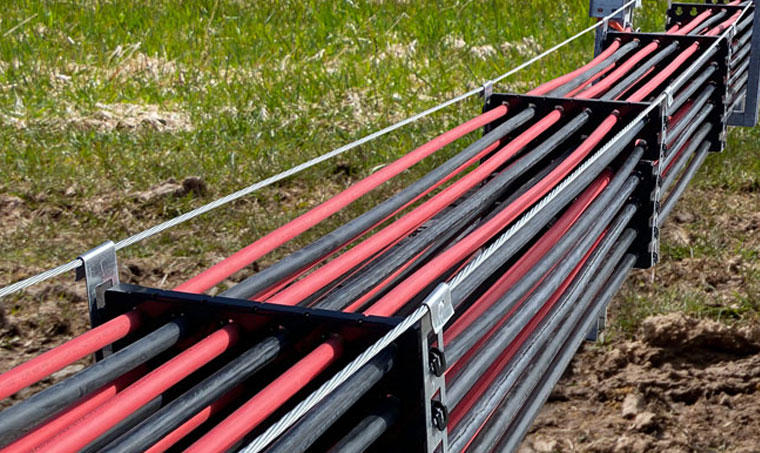
Here are images of cable management systems used in the oil and gas industry, including cable trays, ladder racks, and explosion-proof conduit installations.

These visuals illustrate how cables are routed, supported, and protected in hazardous environments like refineries, offshore platforms, and tank farms. You’ll see examples of:

  • Galvanized and stainless steel cable trays mounted on structural supports
  • GRP (glass-reinforced plastic) ladders used in corrosive or coastal zones
  • Conduit systems for classified areas requiring flameproof protection
  • Cable glands, junction boxes, and clamps ensuring secure terminations and bonding

These systems are designed to meet ATEX, IECEx, and NEC standards, ensuring safety, durability, and ease of maintenance.

General Electrical Services

We offer a general electrical service to the industrial and commercial sector which includes:

  • Electrical consulting
  • Industrial power distribution
  • Industrial lighting
  • UPS installation and distribution
  • Supply of site distribution boards
  • Supply of electrical components
  • Supply of Exe certified enclosures
  • Industrial cable racking and management
  • Generator installation
  • Drafting of electrical schematics
  • Flameproof and Exe lighting or controls
  • Electrical maintenance and repairs
  • Commercial installations
  • and much more…

Contact Us

No.9 Maxwell Street

Ophirton Booysens

Johannesburg

2091

South Africa

Tel: (011) 499 1767/3

Cell: +27 (0) 67 596 7485


Email: hannes@nictech.co.za

Website: www.nictech.co.za